
What Douglas County Probate Records Cover
Probate is the court process that handles a person's affairs after death, plus court oversight for people who can no longer make their own decisions. In Douglas County, those cases are filed at the District Court and become part of the state court case file. The file may include the original will, a petition for informal or formal probate, the appointment of a personal representative, an inventory of assets, claims by creditors, hearing orders, and final accountings. Guardianship and conservatorship matters live in the same court but follow different forms and notice rules.
Probate records in Douglas County usually cover estates of people who died while living in the county, plus guardianships and conservatorships for residents who need a protected arrangement. Informal probate moves through the clerk and registrar when the will is clear and no one disputes it. Formal probate is set for hearing when there is a contest, an unclear will, a missing heir, or a need for a court finding. Small-estate collection by affidavit may be used under Colorado law when the estate falls under the statutory cap and no real property is involved. Trust proceedings can also reach the court when a beneficiary, trustee, or interested party asks the judge to step in.
Recorded deeds and death certificates are separate files. They sit with the Douglas County Clerk and Recorder and with the state vital records office, not the court. Estate work often pulls from both pots. A complete file picture may need the court case and the recorded land record together.
Douglas County Probate Terms Defined
Probate forms and orders use words that do not show up in daily speech. The short glossary below covers the terms most often seen on a Douglas County estate or guardianship file. Knowing the basic terms makes the dockets, JDF forms, and case captions much easier to read.
- Testator
- The person who made the will. A valid Colorado will is signed by the testator and witnessed under state law.
- Executor
- The person named in the will to carry out its terms. Colorado courts more often use the title personal representative for the same role.
- Personal Representative
- The court-appointed person who gathers assets, pays valid claims, files tax papers, and distributes the estate. Letters from the court give this person legal power to act.
- Intestate
- A person who died without a valid will. State law sets who inherits when a Douglas County resident dies intestate.
- Guardianship
- A court arrangement giving one adult the legal duty to care for a minor or an incapacitated adult. The court oversees the guardian and can change the order.
- Conservatorship
- A court arrangement that puts a protected person's money and property under another adult's control. The conservator must report to the court and stay within Colorado conservator rules.
How to Search Douglas County Probate Records
Most public probate look-ups start at the Colorado Judicial Branch dockets page. The dockets tool shows hearings on file for Douglas County District Court, including probate, guardianship, and conservatorship calendar events. The docket does not display the full case file. For copies of the will, the inventory, accountings, or orders, the next step is a JDF 4 record request sent to the court clerk at the Justice Center. The Douglas County Combined Courts page links to all of these tools in one place.
Older probate files may need archive retrieval and are not always at the counter the same day. Sealed or protected matters such as a minor's guardianship or a mental health case may be limited to parties, counsel, and a court order. Plan for a wait when the case is decades old or when the file contains protected-person information.
The walkthrough below tracks the basic search path for a Douglas County probate case.
- Pick the right record type. Wills, estates, guardianships, conservatorships, and trust hearings are state court files at the District Court.
- Open the Douglas County Combined Courts page and read the current notes for probate filing or hearings.
- Use the Dockets link to find a hearing date, courtroom, and case caption.
- Note the Colorado case number from the docket result. The case number drives every later request.
- If the docket alone is not enough, fill out a JDF 4 record request for copies of pleadings, orders, or letters.
- Pay the filing-fee or copy-fee owed under the state schedule. A fee waiver may be filed with JDF 205 in some cases.
- Ask the clerk about archived files for older probate matters that no longer appear in the live docket view.
- For sealed, protected, or juvenile-adjacent files, expect to provide ID and, in some cases, a court order before access.
Douglas County Probate Court Contact
Probate matters in Douglas County are heard at the District Court inside the Justice Center. The same clerk's counter that takes criminal, civil, and domestic filings also takes probate filings. There is one main contact point for the public, listed below.
Douglas County District Court (Probate Division)
4000 Justice Way
Castle Rock, CO 80109
720-437-6200
Court hours follow Colorado Judicial Branch posted schedules
Court records, not recorded land records, are the focus here. For a recorded deed, a death certificate, or a marriage license, the Douglas County Clerk of Court page lists the right county offices and points the public to the Clerk and Recorder when a recorded document is needed in addition to the court file.
Douglas County Probate Filing Fees
Colorado sets a single statewide fee schedule for District Court probate filings. The schedule covers original petitions, letters of appointment, certified copies, and other common probate line items. Douglas County does not add a local surcharge on top of the state schedule for probate. The research file flagged a gap on per-line probate dollar amounts, so the table below points to the state source rather than printing numbers that could change.
| Item | Where to Confirm the Current Fee |
|---|---|
| Original probate petition (informal or formal) | Colorado Judicial Branch fee schedule |
| Letters testamentary or letters of administration | Colorado Judicial Branch fee schedule |
| Certified copy per page | Colorado Judicial Branch fee schedule |
| Guardianship or conservatorship petition | Colorado Judicial Branch fee schedule |
| Fee waiver request (JDF 205) | Colorado Judicial Branch self-help |
Fees can be paid at the clerk's counter at the Justice Center. The clerk takes cash, check, money order, and most card payments under current state policy. Some online payments are routed through the state portal when the case number is known.
What Douglas County Probate Records Show
A probate case file in Douglas County reads like a running record of the estate or protected person. The first papers set the case in motion. Later filings track each step the court approves. The list below pulls from the probate record inventory in the county research file.
| Field | What It Shows |
|---|---|
| Case number | Colorado case ID that links every filing and order in the matter. |
| Estate or protected person name | The decedent in an estate file, or the ward in a guardianship or conservatorship. |
| Case type | Estate, guardianship, conservatorship, or trust proceeding. |
| Filing date | The date the petition opened the case in District Court. |
| Petitioner | Person who asked the court to open the case. |
| Personal representative, guardian, or conservator | Person the court appoints to act for the estate or protected person. |
| Attorney | Counsel of record if one is involved. |
| Letters issued | The court document that gives the appointed person legal power to act. |
| Inventory | List of estate assets and their reported value. |
| Claims | Bills, debts, or other amounts filed against the estate. |
| Orders | Judge rulings on motions, distributions, and final closure. |
| Hearing dates | Set dates for any contested or noticed matter. |
Note: Some lines on a probate file are masked under the court's protected-person rules, so a public copy may not show every field listed above.
Douglas County Probate Help Resources
Self-help groups give a free or low-cost first read on a Douglas County probate question. The lead-in image points to Colorado Legal Services, which screens income-eligible residents for free civil legal help, including some estate and guardianship issues.
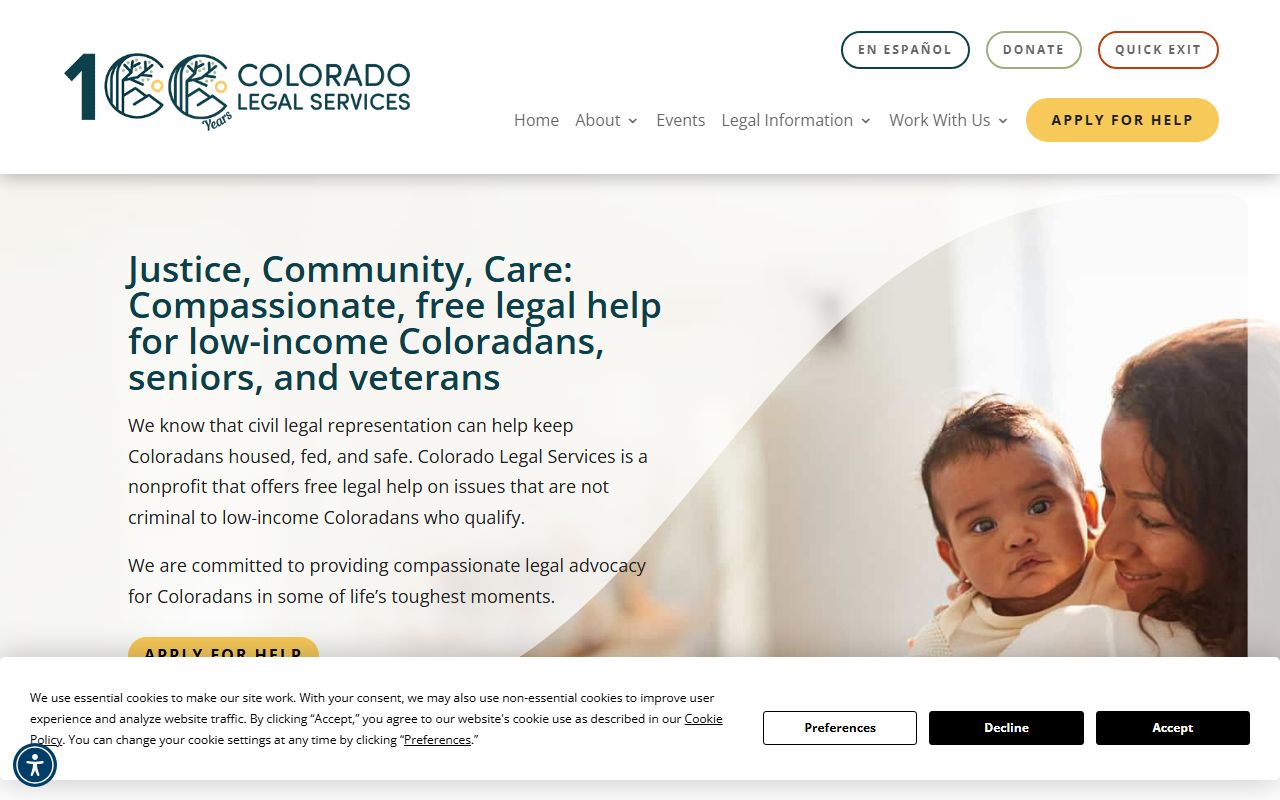
Colorado Legal Services is the main statewide civil legal aid program. Their intake page screens for income and case type, and they handle some estate, guardianship, and conservatorship matters when staff capacity allows. Calling the intake line is the fastest way to learn whether a case fits their service rules.
For do-it-yourself help, the Colorado Bar Association public page lists plain-English guides, lawyer search tools, and law-day events that touch on wills and estates.
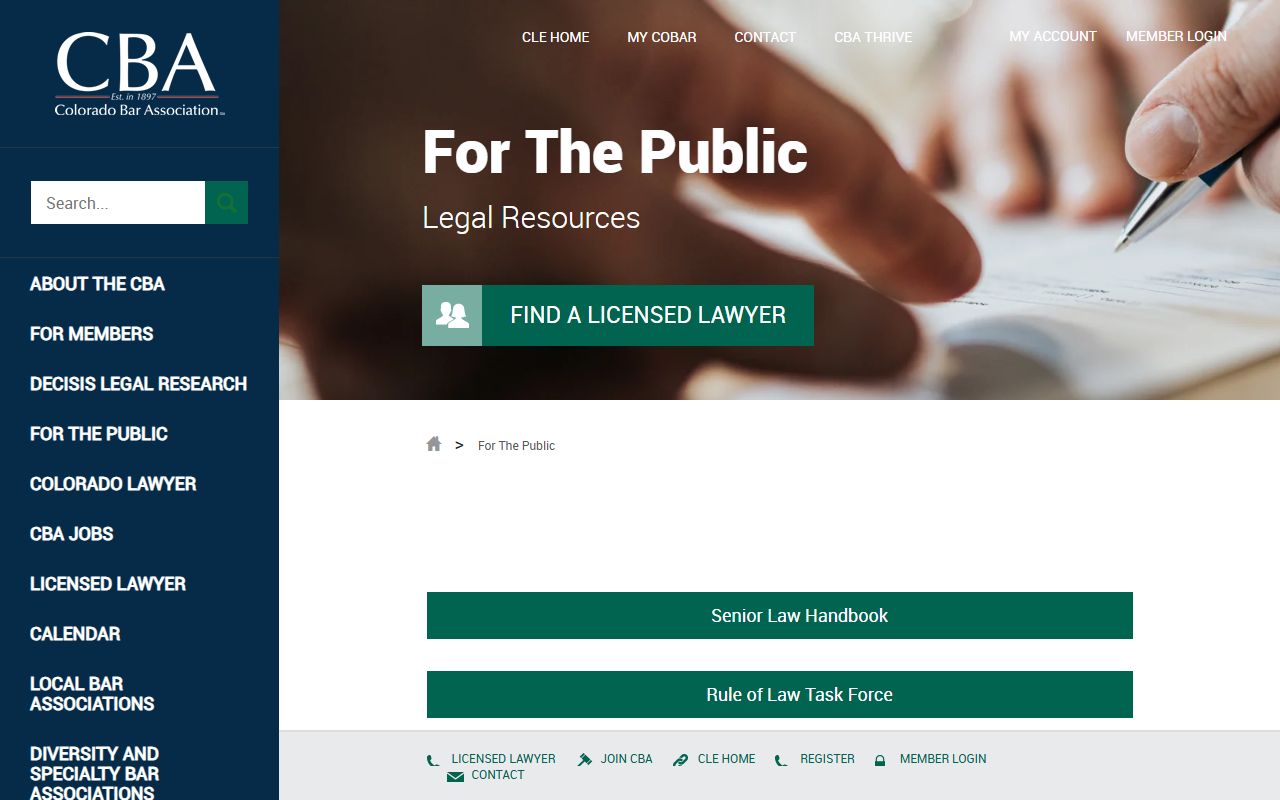
The Bar's public page is a good second stop after Legal Services. It points to lawyer referral, modest-means panels, and free legal clinics that sometimes set up in Castle Rock and the broader 23rd Judicial District. Many of those clinics will not write a will at the event, but they will help a Douglas County resident decide whether to file an estate or use the small-estate affidavit path instead.
Restricted Douglas County Probate Records
Not every part of a probate file is open to the public. Colorado access rules redact or seal pieces that touch on protected people, minors, medical history, and account numbers. The court applies these rules at the counter when a copy is asked for, so even an open file may come back with parts blacked out.
Common limits on Douglas County probate access include:
- Guardianship files for minors, where the child's name and school information are often masked.
- Conservatorship financial filings, where bank account numbers and similar identifiers are redacted.
- Medical and capacity reports, which can be filed under seal and released only to parties or by court order.
- Adult protected-person files that include mental health information limited by federal HIPAA rules.
- Sealed estate files entered under a specific Colorado statute or court order.
The state framework that drives these limits is set out in Title 13 of the Colorado Revised Statutes for court and probate, along with Chief Justice Directive 05-01 on public access. The Colorado Revised Statutes page is the right landing point because direct PDF links can change between yearly publications.